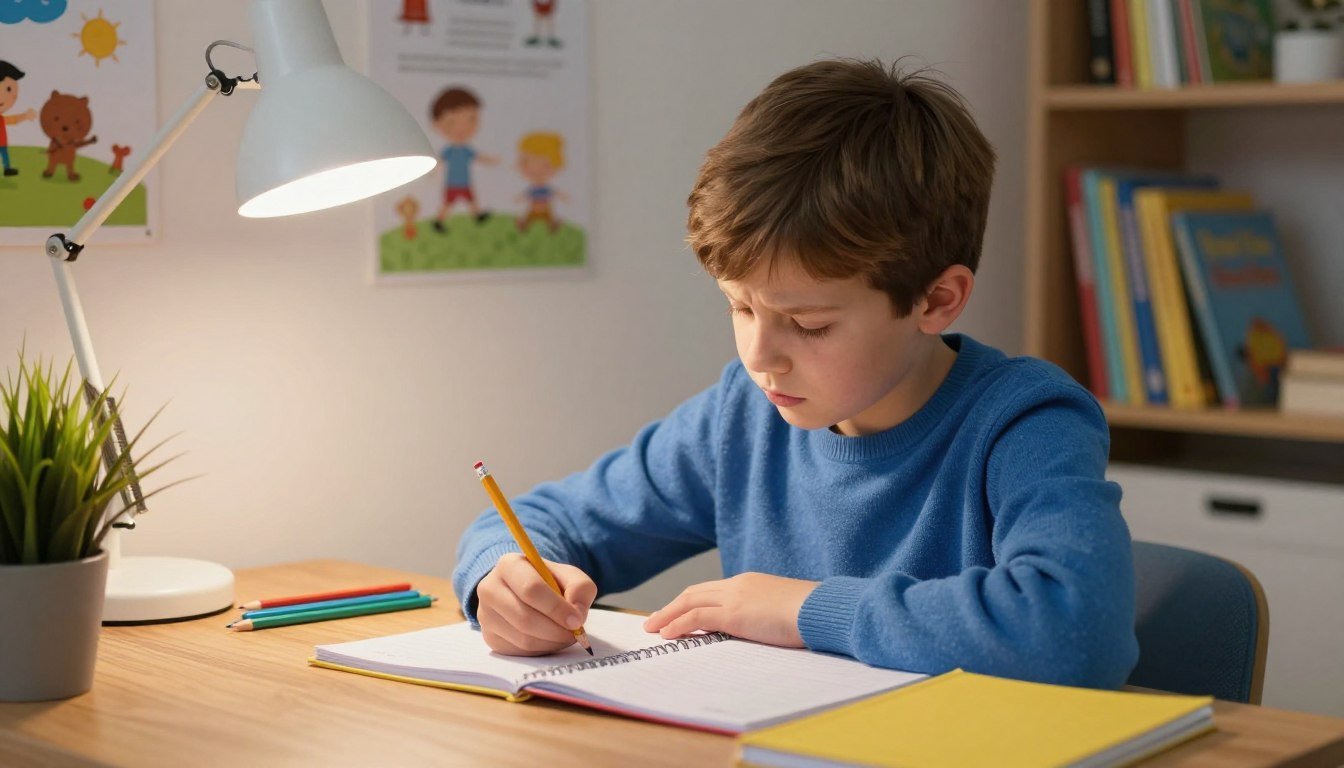
It is nearly bedtime. Your toddler wants one more story, your eight-year-old remembers a school project, and your teenager says they are not tired. A single set of bedtime rules will not fit all three. A bedtime routine for kids by age works best when it has a predictable ending and enough flexibility for the child in front of you. Start with the time they need to wake, allow enough opportunity for sleep, then choose a few calm steps you can repeat most evenings. The examples below cover ages one through seventeen; infants need separate safe-sleep guidance. Start with sleep needs, then work backward The CDC’s recommended sleep ranges are…
Latest Posts
How to Help a Child Who Gives Up When Things Get Hard
The tower falls. The maths answer is wrong. A drawing does not look the way your child imagined. Suddenly, the activity is pushed away: “I can’t do it.” Helping a child who gives up starts with understanding what made the next step feel impossible. Pause the pressure, acknowledge the difficulty, and find the smallest useful step you can support. Sometimes that means another attempt. Sometimes it means teaching a missing skill, changing the task, or taking a break. This guide is for parents and caregivers of children roughly aged 5–12. The aim is to help children learn how to respond to difficulty—not to make them finish everything or hide frustration.…
Memory Games for Kids: 8 Easy Ways to Play at Home
You turn over a picture card, and your child immediately remembers where its partner is. A moment later, they forget whose turn comes next. Memory games for kids can involve several demands at once: remembering pictures, following rules, waiting, and finding words. Start with one simple game, a small amount to remember, and permission to ask for a clue. Matching pairs, copying a movement sequence, or rebuilding a tiny block model can all make remembering part of play. You do not need a paid app or a packed activity schedule. These eight games are aimed mainly at ages 4–10. The age ranges are starting suggestions, not ability tests. Choose by…
Child Bored Without a Screen? What Parents Can Do
The tablet goes away. Within a minute, your child follows you into the kitchen: “There’s nothing to do.” You suggest drawing, a puzzle, or going outside. Every idea gets the same answer: “Boring.” If your child feels bored without a screen, another long activity list may not solve the immediate problem. Start smaller. Acknowledge the feeling, check whether they need rest or connection, and offer two manageable choices. Help with the first step if needed. Keep the agreed screen boundary clear, while allowing some time when nothing exciting happens. This guide is for parents of children roughly aged 5–12. The goal is a more workable transition into everyday play—not a…
Sensory Activities for Autism: 10 Child-Led Ideas
You set out a colourful sensory tray, but your child pulls away. Later, they happily spend ten minutes stroking the edge of a cushion. When choosing sensory activities for autism, that preference is a useful starting point: the activity needs to suit your child, not look impressive in a photograph. Start with one familiar material or movement. Offer a choice, make stopping easy, and watch whether your child wants to continue. The aim is enjoyable exploration and comfort—not making an autistic child tolerate something unpleasant. This guide offers ten low-cost ideas for parents and caregivers of children roughly aged 4–12. Choose by interests, communication, movement abilities, and safety needs rather…
Brain Breaks for Kids: 15 Easy Ideas for Homework Time
Your child has read the same question three times. The pencil is tapping, the chair is moving, and another reminder to “concentrate” is going nowhere. Brain breaks for kids offer a short pause from the task: a chance to move, rest, or do something different before returning. Start with one simple activity lasting around two to five minutes. Choose it with your child, agree on how it will end, and identify the first small step to take afterward. These timings are practical starting points, not a rule for every child. The ideas below suit many children aged 5–12, with seated and quieter alternatives. You do not need an app, special…
10 Signs Your Kid Is Addicted to Gaming
Your kid just threw a controller across the room. Again. You took away the Xbox for one hour. Now they’re crying because someone died. You’re wondering if these are signs your kid is addicted to gaming—or just normal kid stuff. Here’s what’s strange. These warning signs have been confirmed by people who agree on almost nothing else. A free-market economist. A military psychologist. A progressive sociologist. A Buddhist contemplative teacher. A Wall Street behavioral scientist. These people fight publicly about taxes, politics, and human nature. But on this? They landed in the exact same place. That convergence should stop you cold. What Are the Signs of Video Game Addiction in…
10 Proofs That Physical Activity Improves Child’s Behavior
Your child had a meltdown this morning. Again. You’ve tried consequences. Reward charts. Deep breaths. Talking it through. And you’re starting to wonder if something is just wired wrong. It isn’t. But something is missing. The answer is physical activity, and the science is clear that physical activity improves child’s behavior in ways most parents never expect. The proof doesn’t come from one source. It comes from ten completely independent ones—brain surgeons, ancient philosophers, classroom teachers in Finland, and researchers in 22 countries. They all arrived at the same place. Without ever talking to each other. That’s not a trend. That’s a verdict. Why Most Parents Are Skeptical — And…
Child Refuses to Sleep? One Hour Changes Everything
If your child refuses to sleep every night, you are not alone — and you are not failing. This is the story of one mom who tried everything, hit rock bottom on a kitchen floor, and accidentally found the fix that sleep consultants charge hundreds of dollars to tell you. It starts one hour before bedtime. And it works. It was 10:47 pm on a Wednesday. Maya was still awake. She had been awake since 7:30, when her mom first said the words: “Time for bed.” Why Your Child Refuses to Go to Bed Every Night Sarah knew the routine. Or what she called a routine. Dinner. Some TV. Bath…
How to Help a Child Who Cries Before School
If your child cries before school, you are not alone. Learn effective strategies to manage drop-off anxiety and help your little one feel confident today.