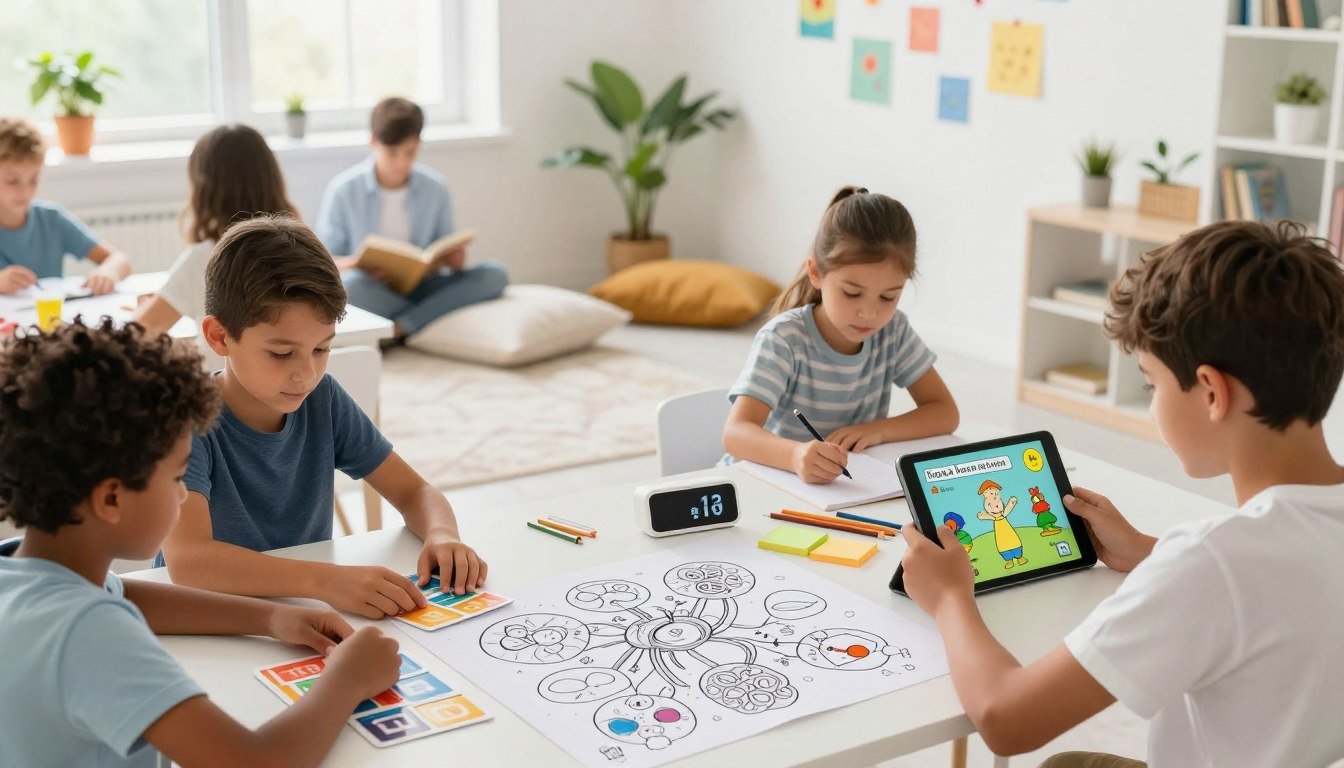
The tower falls. The maths answer is wrong. A drawing does not look the way your child imagined. Suddenly, the activity is pushed away: “I can’t do it.” Helping a child who gives up starts with understanding what made the next step feel impossible. Pause the pressure, acknowledge the difficulty, and find the smallest useful step you can support. Sometimes that means another attempt. Sometimes it means teaching a missing skill, changing the task, or taking a break. This guide is for parents and caregivers of children roughly aged 5–12. The aim is to help children learn how to respond to difficulty—not to make them finish everything or hide frustration.…
Latest Posts
Memory Games for Kids: 8 Easy Ways to Play at Home
You turn over a picture card, and your child immediately remembers where its partner is. A moment later, they forget whose turn comes next. Memory games for kids can involve several demands at once: remembering pictures, following rules, waiting, and finding words. Start with one simple game, a small amount to remember, and permission to ask for a clue. Matching pairs, copying a movement sequence, or rebuilding a tiny block model can all make remembering part of play. You do not need a paid app or a packed activity schedule. These eight games are aimed mainly at ages 4–10. The age ranges are starting suggestions, not ability tests. Choose by…
Sensory Activities for Autism: 10 Child-Led Ideas
You set out a colourful sensory tray, but your child pulls away. Later, they happily spend ten minutes stroking the edge of a cushion. When choosing sensory activities for autism, that preference is a useful starting point: the activity needs to suit your child, not look impressive in a photograph. Start with one familiar material or movement. Offer a choice, make stopping easy, and watch whether your child wants to continue. The aim is enjoyable exploration and comfort—not making an autistic child tolerate something unpleasant. This guide offers ten low-cost ideas for parents and caregivers of children roughly aged 4–12. Choose by interests, communication, movement abilities, and safety needs rather…
Brain Breaks for Kids: 15 Easy Ideas for Homework Time
Your child has read the same question three times. The pencil is tapping, the chair is moving, and another reminder to “concentrate” is going nowhere. Brain breaks for kids offer a short pause from the task: a chance to move, rest, or do something different before returning. Start with one simple activity lasting around two to five minutes. Choose it with your child, agree on how it will end, and identify the first small step to take afterward. These timings are practical starting points, not a rule for every child. The ideas below suit many children aged 5–12, with seated and quieter alternatives. You do not need an app, special…
10 Easy Ways to Help Kids Cope With Anxiety at Home
Discover 10 simple strategies to help kids cope with anxiety at home. Learn effective ways to support your child's mental health and well-being.
How to build confidence in kids
Discover effective strategies on How to build confidence in kids with our comprehensive guide. Learn practical tips to boost self-esteem and foster a positive mindset in children today.
6 Parenting Mistakes That Kill Motivation in Kids
"Avoid these 6 common Mistakes That Kill Motivation in Kids to help your child stay motivated and achieve their full potential."
5 Signs a Child Struggles With Emotional Control
Understand the signs a child struggles with emotional control and discover effective strategies to help them manage their emotions. Improve your child's emotional well-being.
Building Emotional Control in Children Without Punishment
Learn how to help your child by building emotional control in children. Discover positive parenting techniques for effective emotional management.
How Emotional Control and Behavior Of The Child Academic Performance
Learn how emotional control and behavior are linked. Get practical tips on managing emotions and improving behavior with our how-to guide.