
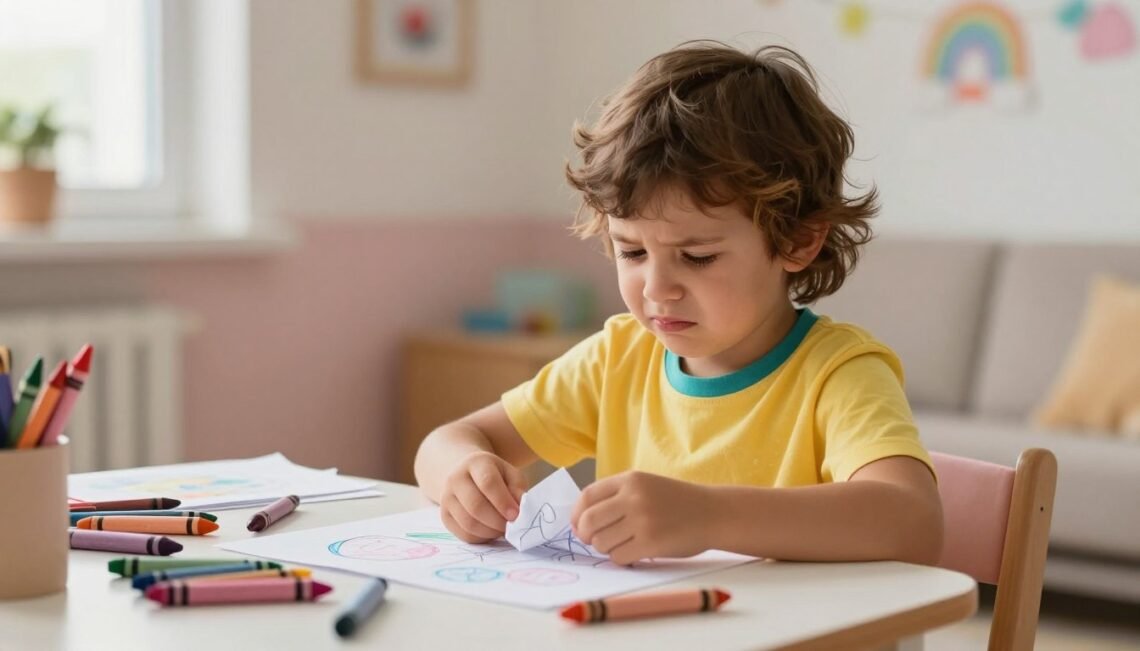
That sudden cry or stomp of a tiny foot can feel like a wave crashing over you. If your little one gets frustrated easily, you’re not alone. Many parents feel overwhelmed by these intense bursts of big feelings.
Janet Lansbury, host of the popular Unruffled podcast, often discusses this. She shares that a 2.5-year-old boy might explode with anger when a block tower falls. This reaction is a normal part of learning new things.
Seeing these moments as a natural way for young minds to process complex emotions changes everything. It’s not a problem to fix, but a chance to connect.
This guide offers calm, practical support for your parenting journey. We’ll explore tools to help you both breathe through the tough times. For more resources, check out Janet’s books, like No Bad Kids, available in paperback on Amazon.
Understanding Your Child’s Frustration
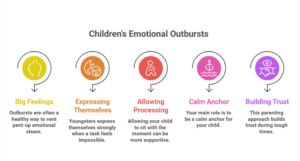
When your little one struggles with a puzzle piece that won’t fit, their outburst isn’t just about the toy. As Janet Lansbury notes in a podcast episode, this big feeling is often a healthy way to vent pent-up emotional steam.
Youngsters express themselves strongly when a task feels impossible. They might cry or urgently ask for help. This is a normal part of learning and life, not a sign they distrust themselves.
Many parents feel a pull to fix the situation right away. Yet, allowing your son or daughter to sit with the moment can be more supportive. It gives them space to process their emotions.
By observing, you’ll see how brilliant kids are at finding an outlet for internal stress. For more on this, check Janet’s podcast website. Her book, Elevating Child Care, is also available in paperback on Amazon.
Your main role is to be a calm anchor. Offer a safe place for all those big feelings to flow out. This parenting approach builds trust during tough times.
Recognizing Triggers and Emotional Cues
Understanding what sets off emotional moments helps you provide support before frustration peaks. This parenting skill turns reactive moments into opportunities for connection.
Identifying common triggers in daily activities
Janet Lansbury notes that big changes, like a new school year, can be a major trigger. Hunger or tiredness also makes simple things feel much harder.
These situations lower a youngster’s tolerance. A regular daily routine can help manage this part of family life.

Observing emotional signals and body language
Watch for signs like whining or a stiff posture. These cues mean your kid is wrestling with big feelings.
Keeping a quick log of these times reveals patterns. You might see the after-school hour is a tough moment.
Sometimes, the thing they’re doing isn’t the real question. They could be using play as a way to release emotions from something else.
Next time you spot these signals, take a breath. Your calm presence is the best help they can get.
The Natural Process of Emotional Expression
A ripped page or a tossed toy isn’t a sign of failure; it’s a young mind’s raw method of emotional housekeeping. Janet Lansbury emphasizes that this expression is a natural part of the learning process.
When a child acts this way, they are clearing mental space to try again. It’s a healthy sign when big feelings flow out and then calm returns.
Parents should avoid the urge to talk their little one out of these emotions. Doing so can unintentionally dismiss a genuine feeling.
By allowing this process, we help our children build resilience for future life challenges. You will find your youngster becomes more capable working through frustration independently.
Next time a meltdown happens, try to stay present. Offer support without trying to fix the situation right away.
If you’re feeling overwhelmed in that moment, remember your calm presence models emotional regulation. This supportive parenting approach makes all the difference.
Approaches to Support a “child gets frustrated easily.”
The key to supporting a sensitive kid lies in understanding the difference between a momentary upset and a deeper meltdown. Your response in these situations sets the tone for emotional growth.
Distinguishing Between Frustration and Tantrums
Janet Lansbury advises that the best way forward is to acknowledge your youngster’s feelings without rushing to fix the thing. A simple expression of frustration is often a brief release. A full tantrum is a bigger wave of emotions that needs more space.
Knowing this helps parents decide when to step in and when to observe. If your child asks for help, offer a little bit of support. Let them complete the main task.
Avoid jumping in too quickly. This protects their chance to build problem-solving skills. Stay close and offer verbal validation. It helps them feel seen in a tough moment.
Next time your little one struggles, trust their internal resources. This parenting approach builds patience and confidence over time. You will see they are capable of more than they believe.
Creating a Calm Environment for Emotional Regulation
Imagine a home where big feelings are welcomed, not feared—this is the foundation for emotional growth. As Janet Lansbury notes in a podcast episode, a calm space is essential for a youngster learning to manage intense emotions. Your parenting approach can turn your house into a sanctuary.
Designing a safe and soothing space at home
Start by creating a cozy corner with soft pillows and favorite books. This gives your son or daughter a safe place to retreat. It’s a simple way to show their feelings are valid.
Remove unsafe objects they might throw in a tough moment. This small bit of prep prevents bigger situations. A predictable environment helps children focus on play.
Minimize distractions during challenging things. Your child can then concentrate on the thing at hand. This builds their own patience over time.
You’re going to notice more independent play as their needs are met. Next time they seem stressed, guide them to their quiet space. Your calm presence offers the best help.
The Role of Parental Modeling in Managing Frustration
Children absorb emotional cues not from lectures but from observing how their caregivers navigate challenging situations. Your response to daily stress becomes their primary guide for handling their own big feelings. This modeling is a fundamental part of effective parenting that shapes emotional life skills.
Staying Calm and Providing Supportive Presence
As Janet Lansbury emphasizes, parents teach emotional regulation through their own behavior. When you maintain composure during a tense moment, you demonstrate the exact coping skills you want your child to learn.
Separating your emotional reactions from theirs allows you to offer genuine support. Your steady presence provides the best help, showing them how to weather emotional storms with grace.
Allowing Natural Emotional Release
Accept that messy emotions are a healthy developmental phase. By being an emotional anchor, you create security for your youngster to explore feelings without judgment.
Next time you face irritation, narrate your process aloud. This shows a constructive way to work through challenges. Over time, they’ll internalize these healthy patterns from your example.
Encouraging Self-Help While Offering Minimal Support
Offering just a sliver of assistance can transform a moment of struggle into a victory of self-reliance. This parenting approach focuses on empowering your youngster to own their feelings and the things they are trying to accomplish.
Balancing independence with gentle guidance
Janet Lansbury recommends giving only a little bit of help. This ensures your child still feels ownership of the task. It’s a powerful way to build the confidence needed for new challenges.
If your youngster is trying to open a jar, you might hold the base while they turn the lid. The goal is to gauge how much support is truly needed. Your child should do as much work as possible themselves.
When we step back, we allow our children to discover their own capabilities. They learn they can overcome difficult situations. This builds resilience for future life experiences.
Next time your little one asks for help, try asking a simple question. “What part do you want to do, and what part should I handle?” This collaborative feeling makes a lot of difference.
If you’re feeling tempted to do it for them, pause. Remember that the process is more important than the final result. You’re going to see their self-esteem grow as they master things that once caused frustration.
Communication Techniques to Validate Emotions
When emotions run high, the skill of empathetic listening transforms a chaotic moment into a connection point. Your words are a powerful tool for showing your youngster that their inner world matters.
Practicing reflective listening and empathy
As Janet Lansbury suggests, reflective listening validates a child‘s experience. Simply state what you observe. For example, “I see you’re upset because that tower fell.”
This way of responding helps your little one feel seen. It acknowledges their big feelings without judgment. You are not trying to fix the situation or stop the tears.
Empathy connects you to their struggle. Use simple language that matches their emotional state. Complex reasoning can wait for a calmer time.
By giving your full attention, you help them process those intense emotions. This parenting approach often leads to a quicker return to calm.
Next time your kid is upset, try reflecting their words back. You’re going to notice they become more willing to share. If you’re feeling unsure, your calm presence is validation enough.
Tailoring Your Approach to Your Child’s Unique Needs
Every young mind processes the world in a distinct way, which means your support must be as individual as they are. The most effective parenting strategy is a custom fit, not a standard size.
Recognizing temperament differences and individual triggers
Janet Lansbury notes that every child has a unique temperament. What works for one youngster may not work for another.
Recognizing your son or daughter’s specific needs helps you tailor your parenting approach. Some children need physical space to release big feelings. Others prefer a quiet corner to reset.
It is vital to observe your little one’s individual triggers. This lets you provide the right kind of help at the right time. You show respect for their individuality.
By customizing your response, you show commitment to their success. You’re going to see your youngster feel more secure. They will know you understand their specific feelings.
Next time you plan an activity, consider their current mood. This ensures it is a good fit for their temperament.
If you’re feeling challenged, remember your willingness to adapt is a sign of a responsive parent. This thoughtful part of family life makes a lot of difference.
Utilizing Breaks and Momentary Pauses
Strategic breaks are not a sign of quitting but a smart tool for emotional management. Introducing a brief pause can change the entire way your youngster approaches a tough thing. It gives everyone a chance to breathe and reset.
Incorporating short breaks during challenging tasks
As Janet Lansbury suggests, a short interlude helps a child reset when stuck. This pause lets them step back from their frustration. They gain a fresh look at the problem.
Parents can gently encourage these pauses. Suggest a quick walk or a drink of water when you see tension rising. This simple help prevents a situation from escalating.
It is vital to frame breaks as a tool, not a punishment. This parenting approach teaches self-regulation as a life skill. Your kid learns to manage big emotions constructively.
By teaching your youngster to recognize when they need a break, you empower them. They gain a lifelong strategy for stress. You’re going to see a lot more calm during difficult things.
Next time your little one struggles, gently propose a short pause. See if they return to the task with renewed focus. If you’re feeling overwhelmed too, take that moment for yourself.
Transitioning from Frustration to Resilience
The journey from feeling stuck to feeling strong is paved with tiny, celebrated victories. This shift is a core part of emotional growth, where frustration becomes a teacher, not a barrier.
Celebrating Small Wins and Progress
As Janet Lansbury emphasizes, noticing small successes helps a youngster transition from feeling overwhelmed to feeling capable. When we focus on the effort rather than the final result, we encourage our children to keep trying.
It is vital to acknowledge progress, no matter how small it may seem. This way of responding builds their confidence. It shows them they have the power to overcome tricky things.
Resilience is built over time as children learn they can handle discomfort. You’ll see your youngster become more persistent when their hard work is recognized.
Next time your little one succeeds, take a moment to point out what they did well. Highlight how their effort made a difference. If you’re feeling like progress is slow, remember every small step builds future emotional strength for life.
Practical Tips from Child Development Experts
Drawing from the wisdom of child development experts can transform how you navigate daily parenting challenges. Their evidence-based strategies offer a clear way to support your youngster’s emotional growth.
Heidi Emberling, EdD, former Director at the Center For Children and Youth, notes that frustration helps children learn to become more resilient. This perspective shifts a tough moment into a valuable learning part of family life.
Integrating insights from trusted sources
Experts like Janet Lansbury, author of No Bad Kids: Toddler Discipline Without Shame, provide specific strategies to help your child manage big feelings. Her books focus on respectful parenting that understands the child‘s perspective.
Integrating insights from resources like Elevating Child Care gives parents a solid foundation. This kind of advice helps you feel more confident during challenging situations.
By using these expert-backed tips, you can build a toolkit for many different things. You’re going to find a wealth of knowledge that applies to your unique situation.
Next time you look for guidance, check these trusted sources. If you’re feeling overwhelmed, remember that professional insights are there to help. You are not alone in this important thing.
Integrating Tools for Daily Frustration Management
Integrating simple games into daily routines can equip your youngster with lifelong coping skills. This parenting approach turns ordinary play into a way to practice handling big feelings before they become overwhelming.
These activities provide a safe space to explore emotions without high stakes. Your child learns to navigate tricky things in a low-pressure setting.
Using play-based activities to build emotional regulation
As Janet Lansbury suggests, play-based tools help children practice emotional regulation. Games that involve taking turns teach patience for future frustration.
Choose developmentally appropriate activities. This ensures your little one experiences success and builds confidence. It’s a vital part of their emotional life.
Play allows exploration of feelings in a safe way. This can reduce reaction intensity during real-life challenges. You’re going to see your youngster become more adept at handling tough situations.
Next time you look for a way to help, try a new game encouraging focus. If you’re feeling like more support is needed, these playful tools bridge the gap beautifully.
Making these tools a regular part of your day helps internalize skills. Your calm presence during play models how to manage any moment. This consistent parenting support makes a big difference over time.
Conclusion
Navigating emotional ups and downs with your youngster is a profound part of the parenting journey. This way of supporting your child requires patience, empathy, and a commitment to respectful parenting.
By trusting their process and staying calm, you provide the foundation for emotional resilience. Every tough moment becomes a chance for your child to learn and for your connection to deepen.
You now have practical tools to help manage big feelings. Keep practicing these strategies in your family life. Resources from experts like Janet Lansbury offer great support when needed.
Your consistent presence is the most important factor for long-term success. Parents and children grow together through these experiences.
Remember, frustration is a natural teacher. Your understanding response helps your youngster build confidence for all of life‘s things. We can do this together, with love and respect.





5 Comments
Pingback:
Pingback:
Pingback:
Pingback:
Pingback: