
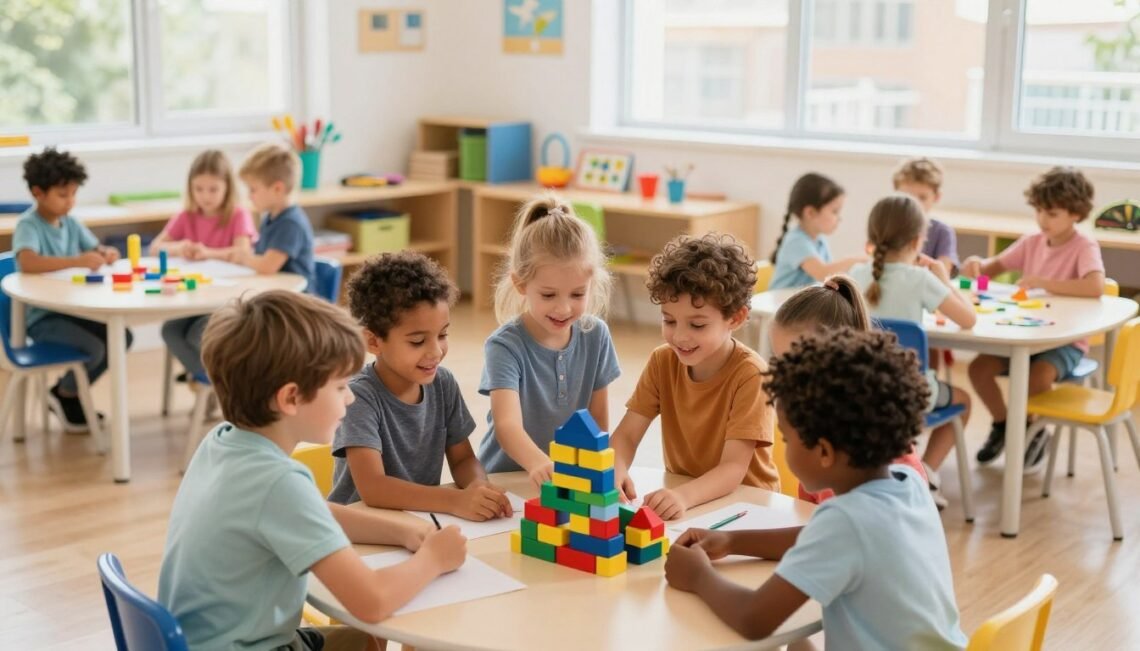
Did you know that a child’s brain forms over one million new neural connections every second during their earliest years? This incredible growth is heavily influenced by their daily activities. The importance of learning through play is fundamental, as it directly fuels this rapid brain development.
From infancy, kids are natural explorers. They use play as their primary method to understand the world around them. This isn’t just fun; it’s serious work that builds critical cognitive, social, and emotional skills.
This guide will dive into the science behind how playful activities shape a child’s mind. We will also share practical strategies for parents and educators. Our goal is to show how to create environments where playful discovery thrives.
Ultimately, play is the most powerful vehicle for holistic child development. It builds a strong foundation for a lifetime of curiosity and learning.
Key Takeaways
- Play is a critical driver of rapid brain development in early childhood.
- Children naturally use play to explore, experiment, and understand their world.
- Playful activities build essential cognitive, social, and emotional skills.
- Understanding this connection helps adults create enriching learning environments.
- This approach supports the development of lifelong learning habits.
The Significance of Play in Early Brain Development
Neuroscience reveals that playful experiences during formative years fundamentally shape brain architecture. This period represents a critical window where children’s activities directly influence neural pathway formation.
Overview of Play and Brain Growth
Early childhood marks a time of exceptional neuroplasticity. When children engage in repeated play, they literally rewire their brains, strengthening connections that support cognitive growth.
Different play activities stimulate various brain regions simultaneously. This holistic approach supports development across multiple domains, from problem-solving to emotional regulation.
Linking Play-Based Learning to Cognitive Benefits
Play-based methods create stronger neural connections than passive approaches. Children develop essential executive functions like working memory and flexible thinking through engaging activities.
Rich play experiences establish learning patterns that persist throughout life. Investing in these approaches during early development yields measurable benefits in cognitive capacity.
These foundational skills prepare children for academic success and lifelong adaptability. The brain’s remarkable ability to adapt through play makes every game a learning opportunity.
The Scientific Benefits of Play-Based Learning
Modern studies reveal that play-based methods create learning experiences that traditional instruction cannot match. This approach engages young minds in ways that build lasting understanding.
Key Research Highlights
A major meta-analysis found that guided play outperforms direct instruction for children under eight. This research shows academic content sticks better when delivered through playful methods.
The Harvard Project Zero study examined playful practices across four countries over eight years. Their international work demonstrates that this approach develops essential 21st century abilities.
Children build collaboration, communication, and critical thinking through engaging activities. Creative innovation and confidence also flourish in these dynamic environments.
Neuroscience and Play: How Our Brains Adapt
Brain scans reveal that play activates multiple regions simultaneously. This creates stronger neural connections than passive learning approaches.
The simultaneous activation leads to more robust memory formation. Children develop deeper understanding when multiple brain areas work together.
Research connects these methods to measurable gains in language and math skills. Problem-solving abilities show significant improvement with playful approaches.
Child development through play supports both academic and social-emotional growth. The scientific foundation for this method continues to strengthen with new evidence.
Understanding the Importance of Learning Through Play
At its core, play is a child’s natural language for discovery. It’s how they make sense of the world from their earliest days. Through play, children also cultivate creativity and critical thinking, skills that are essential for navigating complex challenges. Moreover, engaging in playful activities encourages collaboration and communication among peers, further enriching their learning experiences.
Defining Play and Its Educational Value
True play is child-directed, voluntary, and wonderfully flexible. These activities let young minds explore, experiment, and express themselves freely. In doing so, they build essential competencies.
This concept of learning play includes both structured and unstructured experiences. Both types engage a child’s natural curiosity and intrinsic motivation to discover.
There is immense educational value in letting kids direct their own play learning experiences. When they lead, they pursue their interests with incredible focus. This is often more effective than always following adult-prescribed tasks.
Authentic play connects deeply to a child’s life, interests, and developmental needs. This personal relevance makes the skills they build stick for the long term.
Play also creates a low-stakes environment. Here, young learners feel safe to take risks and make mistakes. They can try again without fear of failure, building resilience.
Ultimately, quality play opportunities build transferable skills. Children carry abilities like adaptability and creative problem-solving into their adult lives. Recognizing play as a legitimate and powerful learning mechanism is key to unlocking its full potential.
Playful Learning in Preschool Settings
Well-organized preschool spaces can transform ordinary moments into extraordinary learning opportunities. The physical environment serves as a third teacher, silently guiding children toward discovery and growth.
Creating a Stimulating Environment
Effective preschool classroom environments dedicate intentional space for diverse play zones. These areas invite children to explore different materials, roles, and concepts through hands-on experiences.
Thoughtful setups might include dramatic play areas with dollhouses, sensory tables with natural materials, and construction zones with blocks. Creative arts spaces with varied media encourage self-expression and innovation.
Organizing the physical space in early childhood settings communicates that playful learning is valued. This arrangement encourages deep engagement with materials and promotes sustained focus.
Free Play Versus Structured Play
Allocating sufficient time during the preschool day is crucial for meaningful play experiences. Children need uninterrupted periods to initiate, develop, and complete their play narratives.
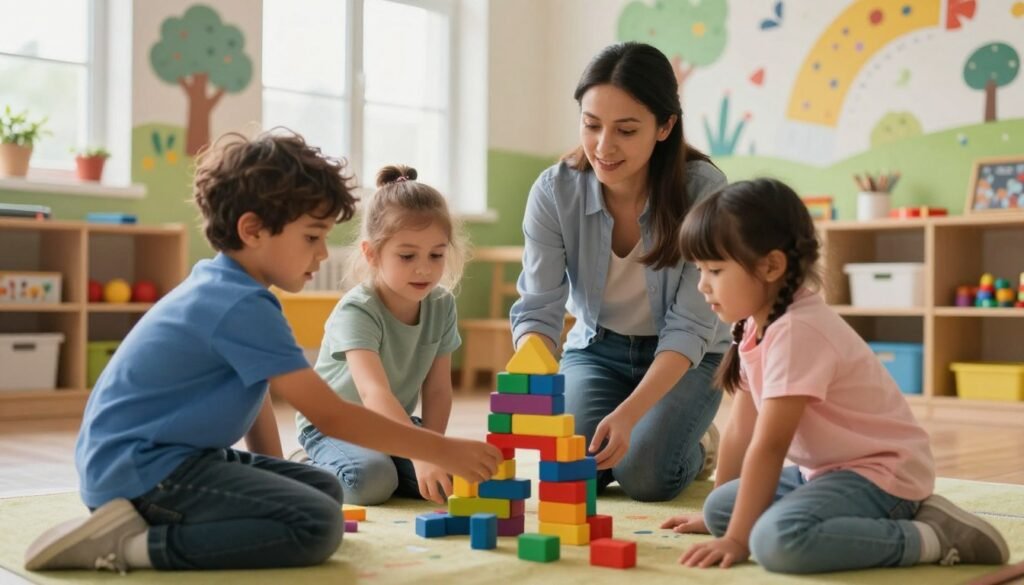
Free play approaches allow children to direct all aspects of their activities. Structured play incorporates adult-guided objectives while maintaining enjoyable elements.
Quality early childhood programs balance both types effectively. Social skills often develop through free play, while specific academic concepts benefit from gentle guidance.
Creating stimulating preschool environments requires thoughtful attention to space, materials, time allocation, and the balance between child-directed and teacher-supported activities.
Integrating Play in K-12 Classrooms
As students progress through the K-12 system, opportunities for playful learning typically diminish despite evidence supporting its effectiveness. Many schools maintain the outdated belief that play belongs exclusively to early childhood education.
Overcoming Traditional Educational Barriers
Teachers often face significant institutional barriers when attempting to incorporate playful approaches. Standardized testing pressures and rigid curriculum requirements frequently prioritize traditional instruction methods.
Fortunately, this false dichotomy between play and academic work is being challenged nationwide. Progressive educators demonstrate that students learn most effectively when classroom experiences incorporate engaging, meaningful activities.
Integrating playful elements doesn’t mean abandoning academic standards. Instead, it delivers education through methods that spark intrinsic motivation and deeper understanding.
Across the country, innovative teachers successfully embed playful learning into mathematics, literature, and science lessons. Their students develop positive associations with education that support lifelong learning habits.
Shifting mindsets among educators and administrators is crucial for recognizing play’s legitimate role throughout all school years. When school becomes a place of joyful discovery, everyone benefits.
Key Characteristics of Effective Play Experiences
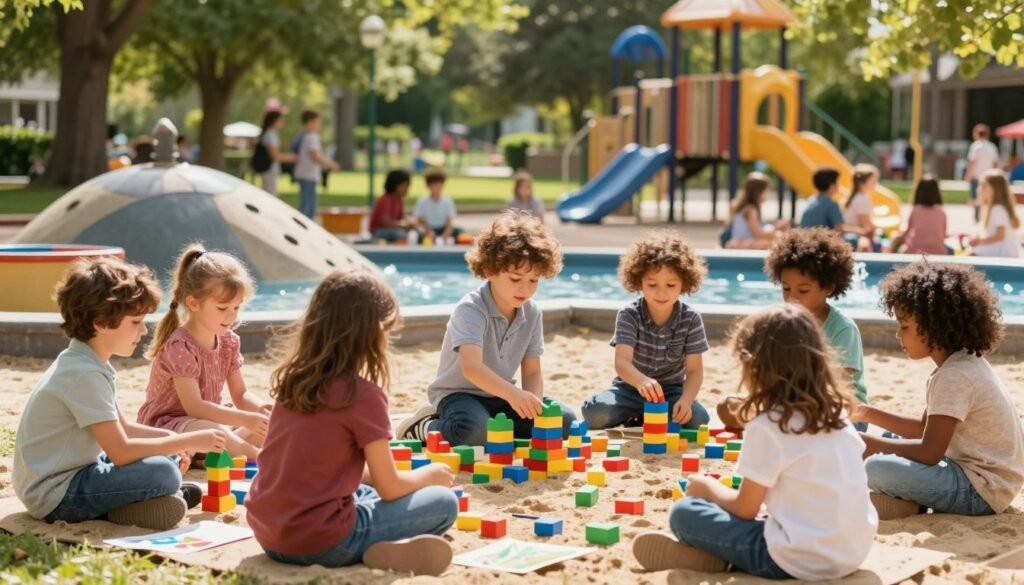
Research identifies five essential qualities that transform ordinary play into powerful learning experiences. These evidence-based characteristics help maximize developmental benefits for young minds.
Joyful and Meaningful Engagement
Joyful experiences create positive emotional states that boost memory formation. When children find meaning in their play activities, engagement deepens significantly.
Connecting play to children’s lives and interests makes learning more relevant. This meaningful approach helps them retain and apply new skills effectively.
Social Interaction and Iterative Learning
Social interaction with peers builds crucial communication and negotiation abilities. These experiences develop strong social emotional competencies.
Iterative play allows children to test ideas, observe results, and try again. This process develops resilient thinking patterns and problem-solving skills.
Real-World Connections in Play
Active engagement occurs when children manipulate materials and make decisions. They drive the experience rather than passively observing others.
While not every play session includes all five characteristics, diverse experiences ensure comprehensive skill development. Providing varied opportunities creates a strong foundation for growth.
Practical Strategies for Classroom Play
Teachers can transform their classroom into a vibrant hub of discovery with a few intentional shifts. These practical approaches make playful learning an integral part of daily instruction. By integrating hands-on activities and interactive lessons, educators can spark curiosity and enthusiasm among students. Encouraging exploration through varied materials allows learners to express their creativity and develop critical thinking skills. Ultimately, this shift not only enhances academic achievement but also nurtures a lifelong love for learning..
Empowering Students in Their Own Learning
Start by giving students more autonomy over their activities. Observe their interests and strengths to connect curriculum goals with their passions.
This creates meaningful learning opportunities that feel personally relevant. Students become more invested when they help guide the process.
Encouraging Collaborative and Creative Problem-Solving
Foster a culture where students build knowledge together. Use purposeful conversations and peer feedback to enhance collective creativity.
Pose open-ended questions that lack a single correct answer. This encourages risk-taking and values diverse thinking.
Incorporate storytelling and role-playing to promote imaginative thinking. Sensory exploration also sparks curiosity and deep engagement.
Remember that play can bring a full range of emotions. Effective teachers design joyful experiences while supporting students through moments of frustration.
These strategies create a classroom environment where every student can thrive. They turn challenges into valuable learning opportunities.
Guided Versus Free Play: A Comparative Insight
Play is not a monolithic concept but exists on a continuum from child-directed to adult-facilitated experiences. Both ends of this spectrum offer distinct advantages for a child’s development.
Benefits of Free Play
Free play is completely child-directed. Children control the themes, roles, and rules without adult intervention.
This voluntary activity is crucial for social-emotional growth. Kids naturally negotiate relationships and resolve conflicts with peers during these unstructured games.
The Guided Play Continuum
Conversely, guided play involves thoughtful adult support while maintaining a playful spirit. This approach includes four distinct types.
- Inquiry Play: Children initiate based on interests, and teachers enhance the experience with probing questions.
- Collaboratively Designed Play: Teachers and students share decision-making about context and materials.
- Playful Learning: This teacher-directed approach embeds skills practice within an engaging, fun context.
- Learning through Games: Educators select games with predetermined rules to teach specific concepts.
Both free play and guided play offer unique advantages. Effective programs provide time for children to experience this full continuum.
Transformative Impact on Cognitive and Social Skills
The lasting effects of playful engagement extend far beyond childhood, shaping academic trajectories for years to come. These experiences build essential capacities that support success across all subject areas.
Long-Term Benefits for Academic Success
Play helps children develop critical cognitive abilities like executive function and flexible reasoning. These skills form the foundation for complex problem-solving in mathematics, science, and literature.
Early play-based experiences establish patterns that influence learning capacity throughout school. The way children approach challenges during their formative years often predicts their academic adaptability later.
Social emotional competencies flourish through collaborative games and imaginative scenarios. Children develop empathy and conflict resolution skills that help them navigate classroom dynamics effectively.
The abilities gained through play—creativity, perseverance, collaboration—are precisely what modern work environments value most. These transferable skills prepare children for real-world challenges they’ll face as adults.
Ensuring equitable access to quality play experiences is crucial for child development. When all children play in rich environments, we create more balanced opportunities for academic achievement.
This approach builds resilience and growth mindsets that last a lifetime. Play serves as the perfect foundation for well-being and success in our constantly changing world.
Conclusion
Children’s brains are wired to absorb knowledge through joyful, hands-on experiences. The evidence confirms that play represents the most natural and effective way children learn. This approach develops both academic abilities and essential life things simultaneously.
Our education system benefits when adults recognize play‘s legitimate role across all ages. Providing adequate time, space, and diverse opportunities should be a priority everywhere.
Adults can embrace creativity in facilitating meaningful play without expensive materials. Simple, thoughtful attention to children‘s interests creates powerful learning moments.
Consider how you can incorporate more playful approaches into daily interactions with children. Ensuring all children have access to quality experiences is both an educational and social justice imperative.
As we better implement these approaches, we help children develop the skills needed to thrive throughout life. Ready to play? Let’s create environments where every child can discover the joy of learning.