

social media kids brain has moved from sidebar worry to central concern for parents and clinicians. A JAMA Pediatrics study finds that habitual engagement with online platforms links to real shifts in adolescent reward processing. This matters because time online can shape how young people respond to praise, rejection, and risk.
Why experts are watching
Dr. Heidi Allison Bender, a neuropsychologist at NewYork-Presbyterian/Weill Cornell, studies how digital habits influence development. Her work shows that the way a child interacts with content may change neural pathways tied to mood and behavior.
What parents can learn
Research suggests the brain stays very adaptable in youth, so screen time and use patterns can affect mental health and development. This intro sets up the evidence and practical steps parents can use to help guide children through these changes.
Understanding the Impact of Social Media Kids Brain Development
Evidence from 2023 points to clear ties between regular online checking and changing neural patterns in teens. The JAMA Pediatrics paper found that habitual social media checking tracks with distinct neurodevelopmental trajectories. These shifts matter for reward processing and emotional responses.
Why this matters:
- Platforms give constant feedback. That feedback can reshape how teens seek approval and pleasure.
- The 2023 study showed that children who habitually check apps exhibit changes in regions tied to rewards.
- Design features often increase stimulation, which can raise risks for anxiety and depression.
Dr. Heidi Allison Bender notes adolescents are especially sensitive to social feedback. Parents who monitor social media use can help balance the benefits social media offers for connection against potential harms. Tracking patterns early supports healthier long-term development.
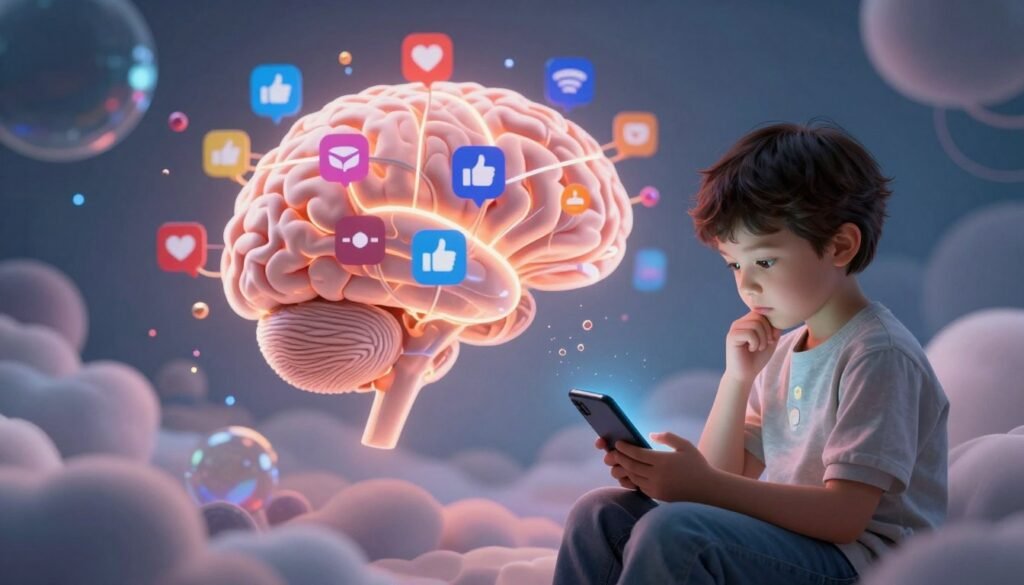
Scientific Findings on Adolescent Brain Changes
New studies now map how constant online feedback reshapes circuits tied to emotion and choice. Researchers focus on two regions that explain why teens respond so strongly to digital rewards.
The Role of Social Rewards
Reward signals from likes and comments drive repeated checking and boost dopamine pathways. This pattern trains teens to seek quick validation, which alters normal decision-making and risk assessment.
Impact on Emotional Centers
Scientific research shows the amygdala, which governs fear and emotional reactivity, is often affected by habitual social media checking. At the same time, the dorsolateral prefrontal cortex, key for judgment and reasoning, displays changed activity in teens who chase online rewards.
- These changes in core structures appear across studies of media use and development.
- High-stimulation platforms can prioritize immediate gratification over long-term control.
- Ongoing research aims to clarify whether these effects reverse with different healthy activity.
Understanding these shifts helps caregivers balance digital benefits with mental health and healthy development.

How Digital Media Influences Cognitive Growth
Daily use of digital platforms can reshape attention and language skills during key windows of growth.
The American Academy of Pediatrics warns that children under 18 to 24 months should avoid screen time, since the 0–5 range is critical for brain development.
Research finds that children aged 8–12 who spend four to six hours on screens may see slower language acquisition and weaker sustained attention.
Real-world play and face-to-face talk remain essential. Those interactions build memory, reasoning, and planning skills in ways that passive viewing cannot.
Some studies report creative benefits from digital activity, yet the overall effects on development and mental health are mixed. How teens and children engage with content matters more than hours alone.
- Limit screen time for young children to protect cognitive growth.
- Encourage hands-on play and conversations to support brain development.
- Prioritize balanced activities that replace constant reward-driven checking.
Identifying Warning Signs of Excessive Use
Small changes in sleep, schoolwork, or friendships can mark the start of unhealthy digital habits. Watch how a teen reacts after scrolling and how often they cancel plans to stay online.
The Compare and Despair Cycle
Compare and Despair happens when teens measure their life against polished posts. Melissa Santos, PhD, warns this pattern makes many feel their life is inferior to what others show.
Signs: constant comparison, low self-esteem, and frequent mood dips after viewing feeds.
Fear of Missing Out
FOMO drives compulsive checking and can create a lonely sense of exclusion. Children and teens may feel pressured to be online to keep up.
Over time, this anxiety can hurt sleep and increase risk for depression and stress.
Signs of Social Avoidance
Excessive use often becomes an escape from school stress or difficult relationships. Look for falling grades, withdrawal from family, or irritability after platform use.
- Decline in school performance
- Withdrawal from friends and family
- Becoming upset after online interactions
What parents can do: talk openly about content, set clear limits, and model balanced screen time. Early recognition lets adults guide children toward healthier real-life relationships and better mental health.
Practical Strategies for Parents and Caregivers
Start by treating device habits like any other family routine: clear, predictable, and modeled by adults. Make rules simple and explain the reason behind them so teens understand the purpose.
Set healthy boundaries by scheduling device-free times, such as during dinner and the hour before bedtime. These breaks lower the risk of poor sleep and reduce anxiety and depression in children and teens.
Be curious rather than accusatory. Learn which platforms your child uses and what content they see. That knowledge helps you guide choices and spot risky behaviors.
Practical tips
- Model phone-free family moments to show the behavior you want.
- Encourage in-person interactions to build stronger relationships with friends and family.
- Have open conversations about the benefits social media can offer, like learning and creativity, while naming the risks.
- Act as a steady decision guide—help teens practice judgment until their frontal lobe matures.
Keep it consistent. Clear, calm limits help technology remain a positive part of life instead of a source of stress.
Conclusion: Navigating the Future of Digital Health
Balancing online engagement with real-world experiences is key to healthy development for children and teens. Families should set clear limits on device time and keep conversations open about what young people see and feel.
Research shows that how we use social media affects brain development and mental health. Parents who learn the latest findings can guide safe media use and encourage offline activities that boost resilience and learning.
Aim for steady rules, model good habits, and revisit them as technology and research evolve. Thoughtful action today supports long-term health and positive development for the next generation.