It is hard to watch a child push through homework while their mind drifts. You may feel worry, patience, or hope that a small change will make evenings calmer. This guide meets that need with kind, practical steps you can try this week.
Many children want to succeed, yet attention slips during tasks — that does not mean laziness. We will define the problem gently and give clear, evidence-based ideas. The key idea: reading alone is not enough; active work plus short, intense sessions help memory and retention.
This guide previews the big levers parents control: environment, routine, time blocks, and the way a child studies. It also includes ADHD-friendly approaches like timers, decluttering, and breaking tasks into steps. Expect real results: shorter homework battles, more finished assignments, and steady gains in concentration and learning over time — not overnight perfection.
Key Takeaways
- Attention improves with structure, not blame.
- Short, active sessions beat long passive ones for memory.
- Simple routines and a calm place boost concentration.
- Timers, breaks, and clear steps help children with attention challenges.
- Small changes this week can cut homework time and stress.
Why focus breaks down during homework and studying
Long sessions often wear out a child’s concentration long before the task ends. When attention slips, work takes longer and learning fades.
What concentration really means
Concentration is the brain’s ability to stay on one task and ignore distractions long enough to understand and remember information.
Active engagement—asking questions, testing, or explaining—helps the brain encode memory better than simply staring at a page.
Common signs of distraction mode
Parents often notice the same patterns: staring blankly, rereading with no gain, frequent snack or bathroom breaks, starting then abandoning tasks, or big emotional meltdowns when work feels huge.
When attention challenges may be part of the picture
If struggles are constant across home and school, with chronic time blindness and high distractibility, ADHD might be involved. That does not label ability.
“Talk with the teacher or pediatrician if concerns are consistent, while trying strategies that build structure right away.”
| Issue | What it looks like | Quick response |
|---|---|---|
| Wandering concentration | Short attention bursts; work drags | Switch to short, intense work blocks |
| Distraction mode | Rereading, frequent breaks, avoidance | Break tasks into tiny steps and set timers |
| Possible ADHD | Persistent across settings; starts/finishes trouble | Discuss with teacher or pediatrician; use structure now |
| High achievers struggling | Good grades but variable attention | Check sleep, screens, and stress; adjust routine |
Set up a distraction-resistant study space
A consistent place helps the brain switch into work mode quickly. Pick one desk, table corner, or library spot so the location itself becomes the cue to begin.
Remove distractions and clutter. Keep only the current book and papers on the surface. Store extra things and tools in a nearby bin so the desk stays calm and short on visual noise.
Try a quick pre-session routine. In two minutes, clear the surface, set out the next item, and write the first step on a sticky note. This small ritual prepares the brain and cuts start-up delay.
- One consistent place signals readiness.
- One tray for today’s papers; one folder per subject; one pencil pouch for tools.
- ADHD-friendly setup: only the current subject on the desk, extras in a bin.
Sound matters. Silence can be distracting for some. Low, lyric-free music or white noise may help concentration without pulling attention away. Test a few options and choose the way that steadies attention.
“Avoid studying in bed — it trains the mind to link that spot with sleep, not alert work.”
| Need | Action | Why it helps |
|---|---|---|
| Consistent place | Use one desk or table corner | Creates a reliable cue for the brain |
| Clutter control | Only current papers and tools on the surface | Reduces visual distractions and task switching |
| Sound | Low instrumental or white noise option | Keeps movement steady without disrupting thought |
| Boundaries | No work in bed; keep rest and work separate | Maintains alertness and better sleep routines |
Create a routine that makes focus easier every day
A steady after-school routine gives children clear next steps and less drift. Consistent patterns reduce confusion and help concentration across the day.
Build a predictable after-school flow
Outline a simple order: snack + decompression, quick movement, then a short homework check-in before free time stretches too long.
- Use the same start ritual daily: wash hands, fill a water bottle, set a timer. This trains the mind to switch into task mode.
- Plan short, planned breaks so children don’t escape into unplanned ones; explain breaks are part of concentration, not a reward.
- Anchor homework to a consistent clock time on school days, while staying flexible for sports and lessons.
Use bedtime routines to support next-day attention
Good nights make better days. A calmer bedtime routine improves sleep quality and boosts concentration the next day.
- Keep similar lights-out times and a short wind-down: reading or a warm shower.
- Set clear screen time boundaries: devices charged outside the bedroom and permitted only after a solid focus block or homework.
- Small parent tips: dim lights earlier, limit late liquids, and keep a consistent wake time to regulate the body’s clock.
“Simple, repeated steps reduce decision fatigue and make attention easier to sustain.”
Time management strategies that work for short attention spans
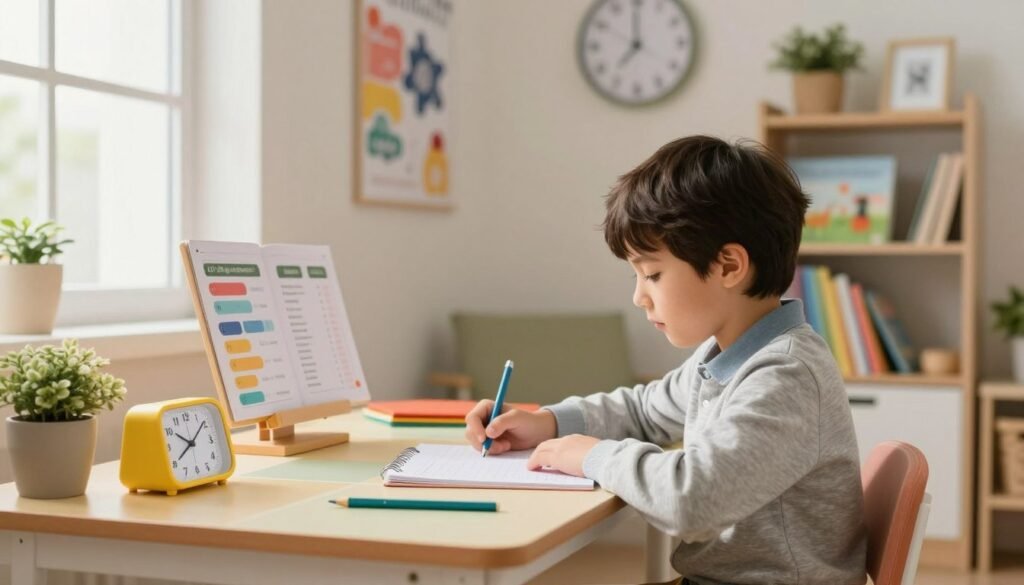
A visible timer turns vague work into a predictable, bite-size event. Use short blocks to reduce overwhelm and make tasks feel doable.
Use timers and short blocks to reduce overwhelm
Why timers help: they create an external container so your child does not guess how long a task lasts. This lowers anxiety and improves concentration.
Start with concrete minutes: 10–15 minutes for younger children, 20 minutes for middle school, and 25 minutes for teens. Then take a brief break.
Try a Pomodoro-style rhythm
Work until the timer rings, then stop on purpose. A classic rhythm is 25 minutes work / 5 minutes break. That pattern prevents burnout and drifting.
Plan the week and visualize the day
Use a whiteboard or calendar with today’s three tasks and an “if time” list. Hold a short Sunday planning moment to break assignments into steps and add blocks to the calendar.
| Age | Block | Break |
|---|---|---|
| Young | 10–15 minutes | 3–5 minutes |
| Middle | 20 minutes | 5–7 minutes |
| Teen | 25 minutes | 5–10 minutes |
“Set measurable goals: finish 8 math problems, write 5 sentences, or make 10 flashcards.”
study skills for kids who can’t focus that build real learning
Active methods turn short attention into solid learning instead of busywork. If a child only rereads a page, the brain often fails to make durable memories.
Why “reading is not studying” and how to shift to active learning
Rereading feels productive but rarely sticks. Encourage quick checks: read a short chunk, close the book, and say the main point aloud.
Self-testing: make a simple quiz
Have the student write five questions on index cards, answer them, then retry missed items. This tiny routine reveals gaps and boosts memory.
Become the teacher by explaining concepts out loud
Speaking a topic aloud—teaching a parent, sibling, or even a toy—shows what the brain understands and what needs work.
Use maps, diagrams, symbols, and real-life examples
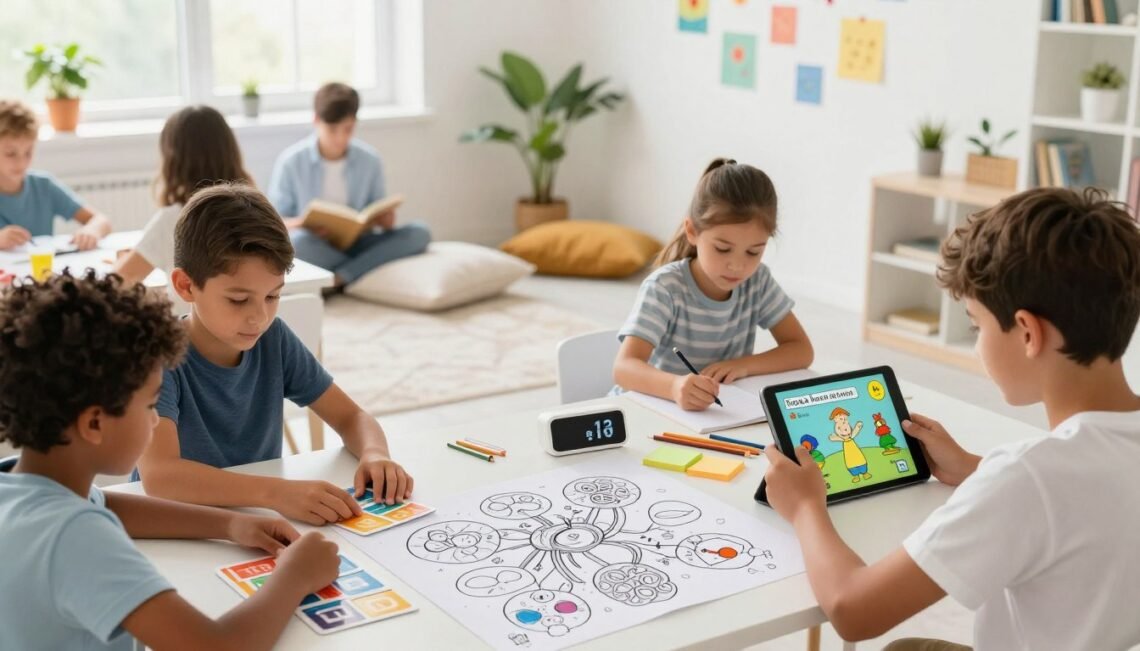
- Create a concept map: main idea in the center, branches for examples and key terms.
- Turn fractions into pizza slices or ecosystems into backyard scenes to make information concrete.
- Use simple symbols and short notes rather than copying pages verbatim.
“Active checking and explaining turn brief attention into stronger memory and clearer concepts.”
Break big assignments into smaller tasks kids can finish
Big assignments become less scary when you chop them into short, visible steps. Start by listing clear mini-tasks so progress is obvious. This reduces overwhelm and makes work feel finishable.
Turn a large task into a bite-size step list with quick wins
Translate an assignment into ordered steps. Example for a report: pick topic → find 3 sources → write outline → draft intro → draft body → edit.
Set a time limit per step to prevent drifting and procrastination
Use a timer of 10–20 minutes per step. Short blocks help concentration and stop perfectionism from stealing minutes.
Reward progress to keep motivation and attention moving
Give micro-rewards after defined steps: a small treat like cookies, a two-minute game, or choosing the next playlist. Rewards should match your family and be earned after each completed task.
- Micro-breaks: short stretch or water between steps, not long detours.
- ADHD-friendly tip: make the first step tiny—“open the doc and write the title”—to overcome starting inertia.
- Long-term strategy: repeating this approach trains a child to view work as a chain of finishable steps, not one endless job.
“Finish one small step at a time — momentum will follow.”
Use distributed practice to improve memory without marathon sessions
Spacing short work across several days beats a single long push. When information returns to the brain over time, memory strengthens and anxiety before tests falls. This approach saves hours of last-minute cramming and protects concentration during each brief session.
Space learning across days and weeks for stronger retention
Distributed practice means doing short, regular review blocks across several days rather than one marathon session. For example, 15 minutes of math per day for five days usually beats two hours the night before in both memory and confidence.
Mix subjects and concepts to keep attention from fading
Interleaving — rotating topics in a single session — keeps the mind engaged and links ideas together. Try switching between two subjects every 15–20 minutes to sharpen recall and reduce boredom.
Use downtime for short review sessions instead of last-minute cramming
Use spare minutes to reinforce learning: review flashcards in the car, quiz for five minutes while dinner cooks, or explain a concept aloud during a walk. These pocket reviews add up across a week and cut the need for long evening hours.
“Short, spaced practice builds long-term memory and makes test time feel familiar, not frantic.”
| Strategy | What to do | Why it helps |
|---|---|---|
| Daily short blocks | 15–20 minutes per subject across several days | Reinforces memory and reduces total study hours |
| Interleaving | Rotate topics or problem types in one session | Keeps attention steady and strengthens connections |
| Downtime reviews | Flashcards, quick quizzes, or explain-out-loud moments | Uses spare time to re-expose the brain to information |
| Weekly light review | Plan one low-load review day each week | Prevents cramming and stabilizes long-term retention |
Reduce screen time, multitasking, and other focus killers
Small digital interruptions add up and make learning slow and frustrating. Multitasking—switching between homework and a device—forces the brain to restart. Research shows this raises errors and lengthens the total time needed to learn.

Why multitasking slows learning
Jumping between tasks feels efficient but it is not. Each switch costs mental time and lowers attention.
Phone and app boundaries that protect homework time
Single-screen rule: close laptops unless a screen is required. If used, keep only the homework tab open.
Try simple phone rules: phone in another room, Do Not Disturb during blocks, or a parent-held charging spot.
Plan tech breaks on purpose
Schedule a 5–10 minute tech break after a completed block and set a timer so it does not turn into a lot of lost time.
“Boundaries are not punishment; they protect attention so work gets done faster and calmer.”
| Problem | Action | Tools |
|---|---|---|
| Multitasking | Use one task at a time; close extra apps | Website blockers, single-tab rule |
| Phone distractions | Place phone out of reach during blocks | Do Not Disturb, parent charging spot |
| Unplanned breaks | Set timed tech breaks after work blocks | Timers, Screen Time, Focus Mode |
Support focus with movement, mindfulness, and brain-friendly habits
Adding movement, short mindful moments, and brain-friendly snacks will steady the mind during homework. These simple routines reset the system and make concentration easier in small, practical ways.
Use physical activity and active breaks to reset attention
Physical activity supports attention. Aim for about 60 minutes of daily play or exercise, and add 2–5 minute movement breaks during work blocks.
Try an “active break menu”: jumping jacks, stair laps, wall push-ups, or a quick dance. These resets restore energy and sharpen concentration.
Mindfulness and simple breathing practices for a calmer mind
Short breathing drills calm the mind without heavy effort. Try 60 seconds of box breathing or five-finger breathing before a hard task.
“A single slow breath often clears distraction and brings attention back to the page.”
Brain-boosting foods and hydration that support concentration
Snack smart: nuts, yogurt, fruit, eggs, and leafy greens support the brain. Keep a water bottle nearby for steady sips to avoid energy dips.
Focus-building games that feel fun but train attention
Games like chess, Sudoku, puzzles, and Simon Says build attention control while playing. Small movement tools or fidgets may help some children settle during short tasks.
| Tool | What to do | Why it helps |
|---|---|---|
| Active break | 1–3 minutes: jump, stretch, or walk | Resets attention and reduces restlessness |
| Mindful breath | 60 seconds box or five-finger breathing | Calms the mind and lowers stress |
| Smart snack | Nuts, yogurt, fruit, eggs | Nourishes the brain and steadies energy |
| Fun games | Chess, puzzles, Simon Says | Trains attention in playful ways; small rewards like cookies after clear goals |
Tip: start with one movement habit and one calming habit. Small changes add up and make homework less tense and more productive.
Conclusion
Start with one tiny habit this week and watch how short wins build lasting progress.
Improving concentration is possible. Change the place, shorten work blocks, and use active methods that boost learning. These strategies reduce arguments and make homework feel finishable.
Try a simple plan: set up a calm space, pick one timer routine, and add a quick quiz or teach-it-out-loud step. Give each change several days to show results.
Look for signs it’s working: less resistance, quicker completion, and stronger recall. If attention remains a big struggle across school and home, talk with your child’s teacher or pediatrician while you keep using these approaches.